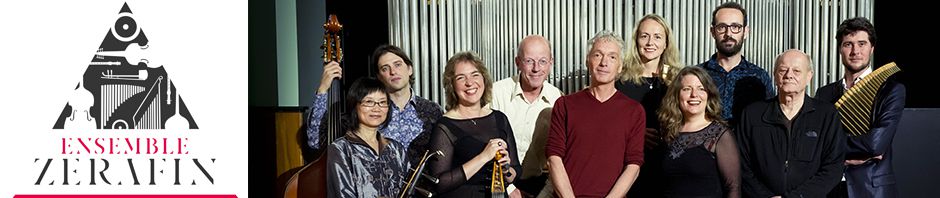
Ensemble Zerafin & Spinvis
Lage Landen Liaison – Mein junges Leben hat ein End
Ensemble Zerafin gaat in dit project een verbinding aan met muziek van eigen bodem. Spinvis vertolkt zijn eigen teksten en muziek. Samen bezingen zij als hedendaagse minstrelen de levensvragen van alle tijden. Dit gebeurt door composities die speciaal door Spinvis voor dit project zijn geschreven en nieuwe werken van de vooraanstaande Nederlandse componisten Roderik de Man en Guus Janssen.
Mein junges Leben hat ein End, oorspronkelijk een volksliedje, waarop Jan Pieterszoon Sweelinck variaties schreef, is de leidraad voor deze voorstelling. Roderik de Man maakte er een bewerking van voor ensemble Zerafin.
Spinvis gebruikt de literaire aspecten van Mein Junges Leben, Guus Janssen schrijft op zijn kenmerkende, creatieve, humoristische en innovatieve wijze variaties over de melodie van het lied en Roderik de Man abstraheert de imitatie en variatietechniek van Sweelinck in een op zichzelf staand stuk. Met de bijzondere, internationale bezetting van Zerafin, is dit programma een amalgaam aan historische, muziekhistorische en compositorische parameters.
Lees het persbericht | Recensie in De Volkskrant | Recensie op Skyline Reviews
In its newest production, Ensemble Zerafin is exploring its national and cultural roots. Alongside Spinvis' creative settings of text and music, the musicians act as modern minstrels, posing eternal questions of life and death. This project will feature not only these premieres by Spinvis, but also new compositions by respected Dutch composers Roderik de Man and Guus Janssen.
Mein junges Leben hat ein End, best known as a series of variations by Jan Pieterszoon Sweelinck based on a folk tune, provides the theme for the project.
Spinvis explores the literary aspects of the original folksong, Guus Jansen re-interprets the melody with his characteristic creative, innovative and humorous approach and Roderik de Man distills the imitative variations of Sweelinck into a new, independent work. Together with the unique, international formation of Ensemble Zerafin, this newest program is an amalgam of historical, musicological and compositional parameters.
Agenda
| February 21, 2016 | 14h15 | Orgelpark Amsterdam | orgelpark.nl |
| February 23, 2016 | 20h00 | Cultuurkoepel Heiloo | cultuurkoepelheiloo.nl |
| March 29, 2016 | 20h30 | de Link, het Cenakel Tilburg | delink.nl |
| April 1, 2016 | 20h30 | Grand Theatre Groningen | grandtheatregroningen.nl |
| May 13, 2016 | 20h15 | Splendor Amsterdam | splendoramsterdam.com |
| May 14, 2016 | 20h30 | Lux Nijmegen | lux-nijmegen.nl |
| August 9, 2016 | 16h00 | Nieuwe Kerk Amsterdam | nieuwekerk.nl | December 11, 2016 | 15h30 | Buiksloterkerk Amsterdam | buiksloterker.nl |
Spinvis
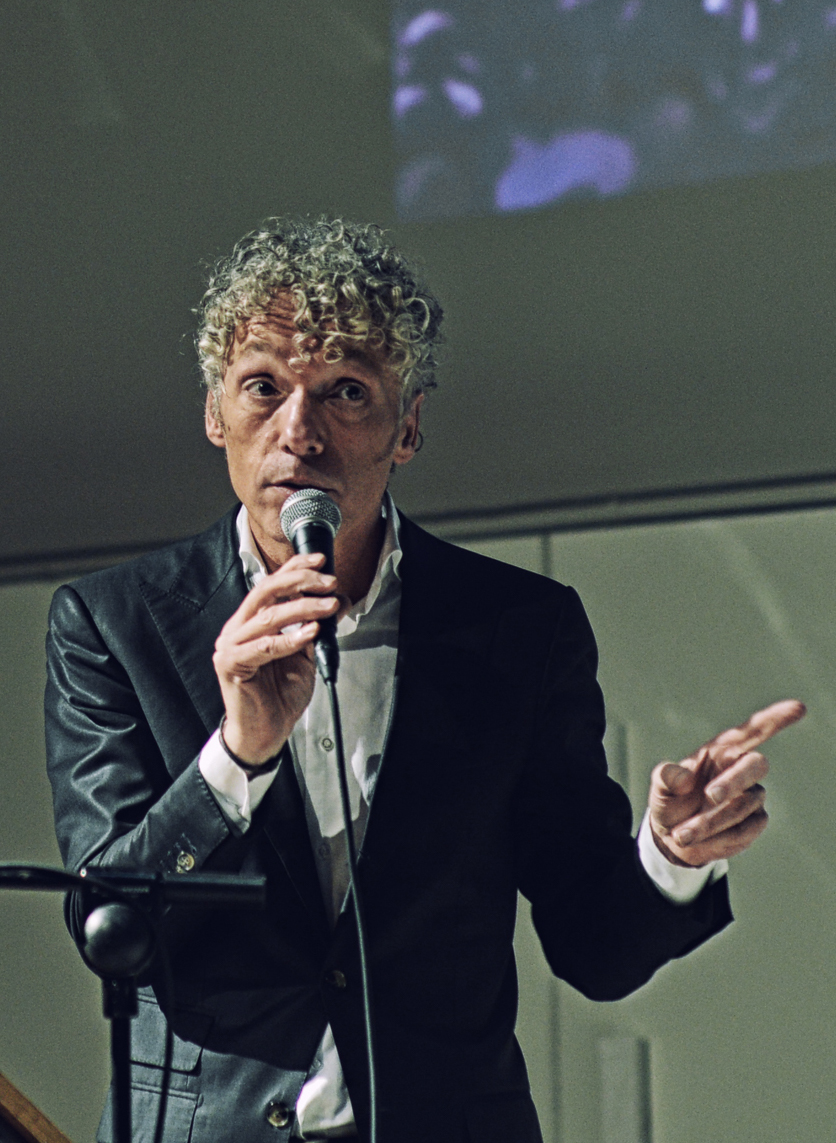 Spinvis is één van de meest vooraanstaande kunstenaars van zijn tijd. Hij experimenteert met geluid voortgebracht door zang en traditioneel instrumentarium naast computers en onalledaagse instrumenten. Zijn poëzie is van literaire kwaliteit. Spinvis laat zich niet beperken tot een vast omlijnd genre, zijn werk is grensverleggend en spreekt een zeer divers publiek aan. Zo begeeft hij zich op het vlak van de popmuziek, schreef liedjes voor zanger Rob de Nijs, schreef filmmuziek en werkte samen met schrijver Simon Vinkenoog. Maar ook manifesteert hij zich in de klassieke muziek getuige zijn samenwerking met het Nieuw Ensemble, het Limburgs Symfonie Orkest en dirigent Ed Spanjaard.
Ensemble Zerafin
Raphaela Danksagmüller: duduk & recorder | duduk & blokfluit Fang WeiLing: erhu Cassandra Luckhardt: viola da gamba Kristina Fuchs: voice | stem Matthijs Koene: pan flute | panfluit Dario Calderone: double bass | contrabas Bart de Vrees: percussion | percussie
Composers | Componisten
Guus Janssen (1951) studeerde piano en compositie aan het Sweelinck Conservatorium te Amsterdam. Als pianist, clavecinist trad hij op in verschillende bezettingen met musici van John Zorn tot Gidon Kremer. Sinds begin jaren tachtig leidt hij zijn eigen ensembles, van (piano) trio tot 11-tet en (opera) orkest. Als solist was hij te horen, primair in eigen composities en als improvisator op diverse internationale festivals. Daarnaast trad hij op met de meeste Nederlandse ensembles en bij diverse orkesten.
Janssen’s composities reiken van pianomuziek en kamermuziek tot symfonisch werk. Zij werden afgezien van hetgeen werd gespeeld door de diverse Janssen-formaties, uitgevoerd door o.m. het Mondriaankwartet, het Nieuw Ensemble, het Radio Kamerorkest, het Concertgebouw Orkest en de Ebony Band met als solisten o.m. Eleonore Pameijer, Walter van Hauwe, Harry Sparnaay en Gerard Bouwhuis. Voor zijn werkzaamheden op het gebied van de jazz-en geïmproviseerde muziek ontving hij de Boy Edgar Prijs, 1981. Voor zijn compositorisch werk werd hij bekroond met de prestigieuze Matthijs Vermeulen Prijs, 1984.
Roderik de Man Verscheidene malen werd zijn werk geselecteerd door de internationale jury van de ISCM, de International Society for Contemporary Music, om uitgevoerd te worden tijdens de Wereldmuziekdagen (Oslo 1991, Mexico 1993, Seoul 1997, Boekarest 1998, Zwitserland 2004). “Music, when soft voices die…”, in 2002 gerealiseerd in opdracht van, en in het Institut International de Musique Electroacoustique de Bourges, won de eerste prijs in het concours Musica Nova in Praag. In 2005 werd “Cordes Invisibles” voor cello, piano en tape(cd) de eerste prijs toegekend tijdens het Concours International de Musique Electroacoustique de Bourges, hetzelfde werk kreeg eveneens een Golden Euphony in 2010.
Roderik de Man’s muziek werd uitgevoerd en uitgezonden in Europa, de Verenigde Staten, Canada, Rusland, Brazilië, Mexico, Venezuela, Indonesië, Korea en Japan.
ARCHIVE
Ensemble Zerafin & Kader Abdolah
Oriental Liaison • Contemporary culture from the East
Oriental Liaison • Hedendaagse cultuur uit het Oosten
Agenda
| January 13, 2012 | 20h30 | Amsterdam Tropentheater (première) | www.tropentheater.nl |
| January 31, 2012 | 20h30 | Tilburg Het Cenakel | www.delink.nl |
| February 11, 2012 | 20h15 | Alkmaar Provadja, Toon en Taal Festival | www.provadja.nl |
| February 23, 2012 | 20h30 | Eindhoven Plaza Futura | www.plazafutura.nl |
| March 25, 2012 | 15h00 | Amsterdam Bethanienklooster | www.bethanienklooster.nl |
Performers | Uitvoerenden
Kader Abdolah: recitation | voordracht
Bassem Alkhouri: voice & qanun | stem & qanun
Raphaela Danksagmüller: duduk & recorder | duduk & blokfluit
Fang WeiLing: erhu
Karin Preslmayr: viola da gamba
Kristina Fuchs: voice | stem
Matthijs Koene: pan flute | panfluit
Jelte van Andel: double bass | contrabas
Bente Olie: percussion | percussie
Composers | Componisten
Vatche Sharafyan
Zaid Jabri
Anahita Abbasi
Elias Bachoura
Reza Namavar
Polina Medyulyanova
Boushra El Turk
This performance is about friendship. Friendship thanks to differences, not in spite of them. A centuries old fable from the East forms the lead of Oriental Liaison: Motawatché, the dove that wore a necklace of pearls is about the blackbird, the mouse, the turtle and the deer. On first sight they have no common ground, and yet they form a friendship that is indestructible.
The story of these friends touches the core of Ensemble Zerafin. These musicians decided for a similarly indestructible friendship after collaborating for years in the Ensemble Ziggurat.
For Oriental Liaison, Ensemble Zerafin has invited composers with roots in the Middle East to write compositions to Motawaché. These composers operate in the middle of the contemporary music world, but have always kept a connection with their origin.
Motawaché will be recited by Kader Abdolah. He wrote the Dutch version of the Fable, departing from the Arabic. The prize-winning writer fled from his native Iran to the Netherlands in 1988. Soon he started to write in Dutch, but in his work he reaches back to his Iranian roots.
The performance closes with an epilogue on a text by humanist Petrarca. Humanists saw the world not as a hellish waiting room for heaven, but as a fine place where relations to others are central. Just like the blackbird, the mouse, the turtle and the deer.
Dit is een voorstelling over vriendschap. Vriendschap dankzij onderlinge verschillen, niet ondanks. Een eeuwenoude Oosterse fabel loopt als rode draad door Oriental Liaison. Motawaché, de duif die een halssnoer van parels droeg gaat over de kraai, de muis, de schildpad en het hert. Op het eerste gezicht hebben zij niets met elkaar te maken, maar toch sluiten ze een onverwoestbare vriendschap. ‘Wanneer vrienden je in nood nodig hebben, vraag je niet waarom.’
Het verhaal van deze vrienden raakt aan de kern van Ensemble Zerafin. Deze musici besloten tot eenzelfde onbreekbare vriendschap na hun jarenlange samenwerking in Ensemble Ziggurat.
Voor Oriental Liaison heeft Ensemble Zerafin componisten met wortels in het Midden-Oosten gevraagd om stukken te componeren bij Motawaché. Componisten die midden in de hedendaagse muziekwereld staan, maar altijd een verbinding zoeken met hun oorsprong.
Motawaché wordt voorgedragen door Kader Abdolah, hij bewerkte de fabel vanuit het Arabisch. De veelbekroonde schrijver vluchtte in 1988 naar Nederland vanuit zijn geboorteland Iran. Hij schreef al snel in het Nederlands, maar grijpt in zijn werk terug op zijn Iraanse wortels. De voorstelling sluit af met een epiloog op een tekst van humanist Petrarca. Hij zag de wereld niet als een helse wachtruimte tot de hemel, maar als een fijne plek waar betrekkingen met anderen centraal staan. Net als de kraai, de muis, de schildpad en het hert.